Kitchen Renovation Ideas for Winnipeg Homes, What Actually Adds Value
Planning a kitchen renovation in Winnipeg? From layout changes to cabinet refacing, here are the ideas that add real value, and the ones that don't. A designer's honest guide.
Georgia
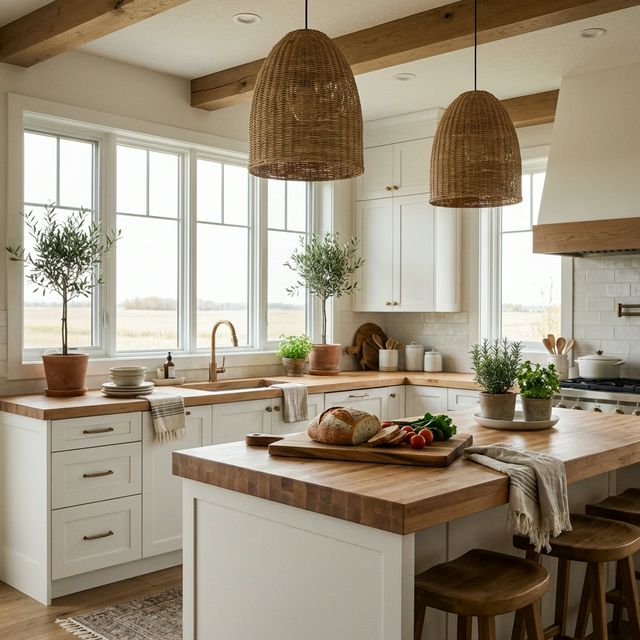
The kitchen sells the house. Realtors say it, designers know it, and the data backs it up, a well-executed kitchen renovation recovers 60–80% of its cost at resale in the Winnipeg market. But a poorly planned one? You might as well have set the money on fire and at least enjoyed the warmth.
I’ve designed kitchens across Winnipeg, from century-old Wolseley bungalows to new builds in Sage Creek, and the most common mistake homeowners make is spending big on the wrong things. This guide walks you through what actually matters.
For more on this topic, see our guide on Basement Renovation in Winnipeg, A Complete Before-and-After Planning Guide.
Before You Rip Anything Out: Define Your Goals
Every kitchen renovation starts with one question: why are you doing this?
For more on this topic, see our guide on Open Concept Kitchen and Living Room, How to Make It Actually Work.
The answer changes everything:
- Selling in the next 1–2 years? Focus on cosmetic updates with broad appeal. Keep costs under $25,000–$35,000. Neutral finishes, modern hardware, functional layout.
- Staying for 5+ years? Invest in what makes your life better. That pot filler you love? Go for it. The oversized island for family baking? Absolutely.
- Full gut renovation? Budget $40,000–$80,000+ in Winnipeg. This is where layout changes, new plumbing, and structural work happen.
The biggest regret I hear from clients: “I wish I’d spent more on the layout and less on the finishes.” A gorgeous backsplash can’t fix a kitchen where you walk 20 steps to get from the fridge to the stove.
Layout: The Foundation That Everything Else Sits On
The Work Triangle Still Matters
The relationship between your sink, stove, and refrigerator is the backbone of kitchen efficiency. Each leg of the triangle should be 4–9 feet. Too close and you’re cramped. Too far and you’re exhausted by dinner prep.
In many Winnipeg homes, especially the post-war bungalows in St. Vital, Fort Richmond, and Transcona, kitchens were designed as closed, galley-style rooms. Opening these up to the dining or living area is one of the highest-impact changes you can make.
Popular Layout Options
Galley kitchen (keep it): If you’re in a smaller home and the galley layout works, don’t fight it. Galley kitchens are incredibly efficient for cooking. Improve them by:
- Extending countertop space where possible
- Adding under-cabinet lighting
- Replacing upper cabinets with open shelving on one side for visual relief
L-shape with island: The most popular layout in Winnipeg renovations right now. The L provides continuous countertop along two walls, and the island adds prep space, casual seating, and storage. You need at least 10 feet of clearance for a functional island, if your kitchen is smaller than that, a rolling cart achieves the same goal.
U-shape: Maximum counter and storage space. Works best in larger kitchens. Common in newer Winnipeg homes with open-concept floor plans. The risk: feeling boxed in. Counter this by keeping one arm of the U lower (peninsula height) or open.
One-wall with island: Increasingly popular in open-concept renovations. All appliances and cabinetry along one wall, with a large island opposite. Looks clean and modern. Requires excellent organisation because storage is limited on a single wall.
Removing Walls
Many Winnipeg homeowners want to open up their kitchen to the living area. Before you start swinging a sledgehammer:
- Determine if the wall is load-bearing. In most bungalows, interior walls running perpendicular to the floor joists are load-bearing. A structural engineer ($300–$500 assessment) is a worthwhile investment before you commit.
- Budget for a beam. If the wall is load-bearing, removing it requires a structural beam. In Winnipeg, expect $2,000–$6,000 for the beam installation depending on span.
- Consider the electrical. Kitchen walls often carry circuits. Rerouting electrical adds $500–$2,000.
- Think about HVAC. Heating ducts sometimes run through kitchen walls in older Winnipeg homes. Rerouting ductwork is possible but adds cost and complexity.
Cabinets: Where Most of the Budget Goes
Cabinetry typically consumes 30–40% of a kitchen renovation budget. You have three main options:
Option 1: Reface (Budget: $5,000–$12,000)
Keep the existing cabinet boxes and replace only the doors, drawer fronts, and hardware. Add new end panels and crown moulding. This works if:
- Your cabinet boxes are solid (plywood, not particle board)
- The existing layout works
- You want a dramatic visual change without the cost of new cabinets
Option 2: Paint and Update (Budget: $2,000–$5,000)
Professional cabinet painting is transformative. A skilled painter will sand, prime, and spray multiple coats for a factory-smooth finish. Pair with new hardware ($3–$8 per pull) and you’ve got a kitchen that looks completely different for a fraction of replacement cost.
Best paint colours for kitchen cabinets in 2026:
- Pure White (warm white, not stark), timeless and safe for resale
- Sage green, the trend of the moment, pairs beautifully with brass hardware
- Warm charcoal, dramatic on lowers, especially paired with white uppers
- Navy, classic, works in both traditional and modern homes
Option 3: Replace (Budget: $10,000–$35,000+)
New custom or semi-custom cabinets. This is the route when you’re changing the layout, need more storage, or the existing boxes are deteriorating. Winnipeg has excellent local cabinet shops, getting quotes from three local makers will typically beat the big-box alternatives on quality and sometimes on price.
What I tell every client: Soft-close hinges and drawer slides are non-negotiable in 2026. If your budget is tight, spend the extra $200–$400 to add soft-close to painted existing cabinets. The feel of the kitchen changes immediately.
Countertops: What’s Worth the Money
Quartz ($60–$120/sq ft installed)
The dominant choice in Winnipeg kitchens. Non-porous, no sealing required, consistent colour. The days of quartz looking “fake” are over, modern quartz convincingly mimics marble, concrete, and natural stone. Cambria (made in Minnesota, readily available here) and Silestone are popular choices.
Granite ($50–$100/sq ft installed)
Still a solid choice. Natural variation means every slab is unique. Requires annual sealing but handles heat better than quartz. If you find a slab you love at a local stone yard, granite can be more affordable than premium quartz.
Butcher Block ($30–$60/sq ft installed)
Warm, natural, and more affordable. Works beautifully on islands or as a secondary surface. Requires oiling every few months and is susceptible to water damage around sinks. I often recommend butcher block on the island and quartz on the perimeters, the mixed-material look adds character and saves money.
Laminate ($15–$35/sq ft installed)
Modern laminate is nothing like the laminate of the 1990s. Brands like Formica and Wilsonart offer convincing stone and wood-look options with much better durability. For a budget renovation or rental property, quality laminate is a smart, honest choice.
Backsplash: High Impact, Moderate Cost
The backsplash is where you can inject personality without risking resale value. Budget: $800–$3,000 for materials and installation in a typical Winnipeg kitchen.
Trending backsplash choices in 2026:
- Herringbone subway tile, classic subway tile laid in a herringbone pattern. White or off-white is timeless. Costs slightly more in labour due to the angled cuts.
- Zellige tile, handmade Moroccan tile with irregular edges and a glossy finish. Adds instant character. Available at specialty tile shops and increasingly at mainstream retailers.
- Full-height slab, extending your countertop material up the wall. Clean, modern, dramatic. Costs more but eliminates grout maintenance.
- Penny tile, small round tiles, often in a contrasting colour. Playful and vintage-inspired.
My advice: If you’re selling soon, stick with white or neutral subway tile. If you’re staying, pick what makes you smile every time you walk into the kitchen.
Appliances: Don’t Overspend
This is where I save clients the most money. The truth about kitchen appliances:
Stainless steel is still standard for resale, but black stainless and matte black are gaining ground. Avoid trendy finishes if you’re selling within 2–3 years.
You don’t need commercial-grade appliances unless you cook at a professional level. A $1,200 range performs nearly identically to a $4,000 range for typical home cooking.
Invest in the range hood. This is the most underrated appliance in the kitchen. A proper range hood vented to the exterior (not a recirculating microwave hood) dramatically improves air quality, reduces grease buildup, and makes the kitchen feel more polished. Budget $300–$800 for a good one.
Dishwasher noise level matters. Anything under 44 dB is whisper-quiet. In an open-concept kitchen, a loud dishwasher ruins the living space. Bosch remains the gold standard for quiet operation in the mid-range price point.
Flooring: What Works in a Winnipeg Kitchen
Kitchen flooring needs to handle water, dropped dishes, heavy foot traffic, and, in Winnipeg, the salt, sand, and moisture that comes in on winter boots.
Best options:
- Luxury vinyl plank (LVP): The most popular choice for good reason. Waterproof, durable, comfortable underfoot, and available in convincing wood-look finishes. $3–$7/sq ft installed.
- Porcelain tile: Indestructible and waterproof. Cold underfoot unless you add in-floor heating (worthwhile in Winnipeg). $6–$15/sq ft installed.
- Engineered hardwood: Beautiful but risky near sinks and dishwashers. If you want the look of wood, LVP is the pragmatic choice for kitchens.
Lighting: The Detail That Transforms Everything
Poor lighting is the most common flaw in Winnipeg kitchens. Most have a single ceiling fixture, usually a fluorescent box from the 1980s, and nothing else.
A properly lit kitchen has three layers:
- Ambient lighting: Recessed pot lights (LED, 3000K warm white) on a dimmer. Six to eight lights for an average kitchen. Budget: $800–$1,500 installed.
- Task lighting: Under-cabinet LED strips illuminating the countertop. This is the single best lighting upgrade you can make. Budget: $200–$500 for quality LED strips with a dimmer.
- Accent/decorative lighting: Pendant lights over an island or dining area. These provide personality and focal point. Budget: $100–$500 per fixture.
The Realistic Winnipeg Budget Breakdown
Here’s what a mid-range, full kitchen renovation typically costs in Winnipeg in 2026:
| Item | Budget Range |
|---|---|
| Cabinets (new, semi-custom) | $12,000–$25,000 |
| Countertops (quartz) | $3,000–$6,000 |
| Backsplash | $800–$2,500 |
| Appliances | $3,000–$8,000 |
| Flooring | $1,500–$4,000 |
| Lighting | $1,000–$3,000 |
| Plumbing (sink + faucet) | $500–$2,000 |
| Labour | $5,000–$15,000 |
| Contingency (10–15%) | $3,000–$8,000 |
| Total | $30,000–$75,000 |
For a cosmetic refresh (paint cabinets, new hardware, new countertops, backsplash, lighting), budget $8,000–$18,000. This is the sweet spot for sellers.
Five Ideas That Add the Most Value Per Dollar
- Under-cabinet lighting. Costs $200–$500. Makes every kitchen look more expensive. Best ROI upgrade in any kitchen.
- New cabinet hardware. $100–$300. Swapping brass or matte black pulls onto existing cabinets is a 30-minute transformation.
- Professional cabinet painting. $2,000–$5,000. The single most impactful visual change for the money.
- A proper range hood. $300–$800 plus installation. Upgrades both function and aesthetics.
- Declutter and organise. Free. Internal organisers, pull-out shelves, and simply removing clutter from counters makes any kitchen feel bigger and more functional.
Five Ideas That Rarely Pay Off at Resale
- Ultra-high-end appliances in a mid-range home. A $6,000 range in a $350,000 Winnipeg home doesn’t add $6,000 to the sale price.
- Overly trendy tile patterns that date quickly. That geometric cement tile may look incredible today and dated in five years.
- Wine fridges and specialty appliances. Fun to own, negligible resale impact.
- Knocking out walls without a plan for the resulting open space. Open concept only works if the spaces on both sides are designed together.
- Luxury flooring in a kitchen that still has builder-grade cabinets. Match your finish levels, one premium element surrounded by budget elements looks odd.
Finding the Right Contractor in Winnipeg
The Winnipeg renovation market is competitive, and good contractors book months in advance. Start planning 3–6 months before your desired start date.
How to find quality contractors:
- Ask friends and neighbours who’ve recently renovated
- Check the Manitoba Home Builders’ Association directory
- Read Google reviews (look for detailed reviews, not just star ratings)
- Visit local kitchen showrooms, they often have contractor referral lists
Red flags:
- No written contract or vague scope of work
- Demands full payment upfront (standard: 10–15% deposit, progress payments, final holdback)
- No Manitoba contractor’s licence or liability insurance
- Can start “right away” (good contractors are booked ahead)
Get three quotes minimum. Compare not just price but scope, timeline, materials specified, and warranty terms.
When to Call a Designer
A kitchen designer isn’t just for luxury projects. Consider hiring one if:
- You’re changing the layout (even slightly)
- You’re spending more than $25,000
- You feel overwhelmed by choices
- You want to avoid costly mistakes
A design consultation, even a one-time session, often pays for itself by preventing expensive errors. At Georgia Home Design, I offer kitchen design consultations that cover layout, materials, and a prioritised renovation plan tailored to your budget and goals.
Planning a kitchen renovation and don’t know where to start? Georgia Home Design offers virtual consultations worldwide, I’ll help you create a kitchen plan that balances your budget, your lifestyle, and your home’s resale potential. Book a consultation →