Winter-Proof Interior Design, How to Make Your Home Feel Warm When It's -30 Outside
Canadian winters demand more from your interior design. Here's how to make your home genuinely warm, bright, and cosy through the coldest months, without it looking like a ski lodge.
Georgia Home Design
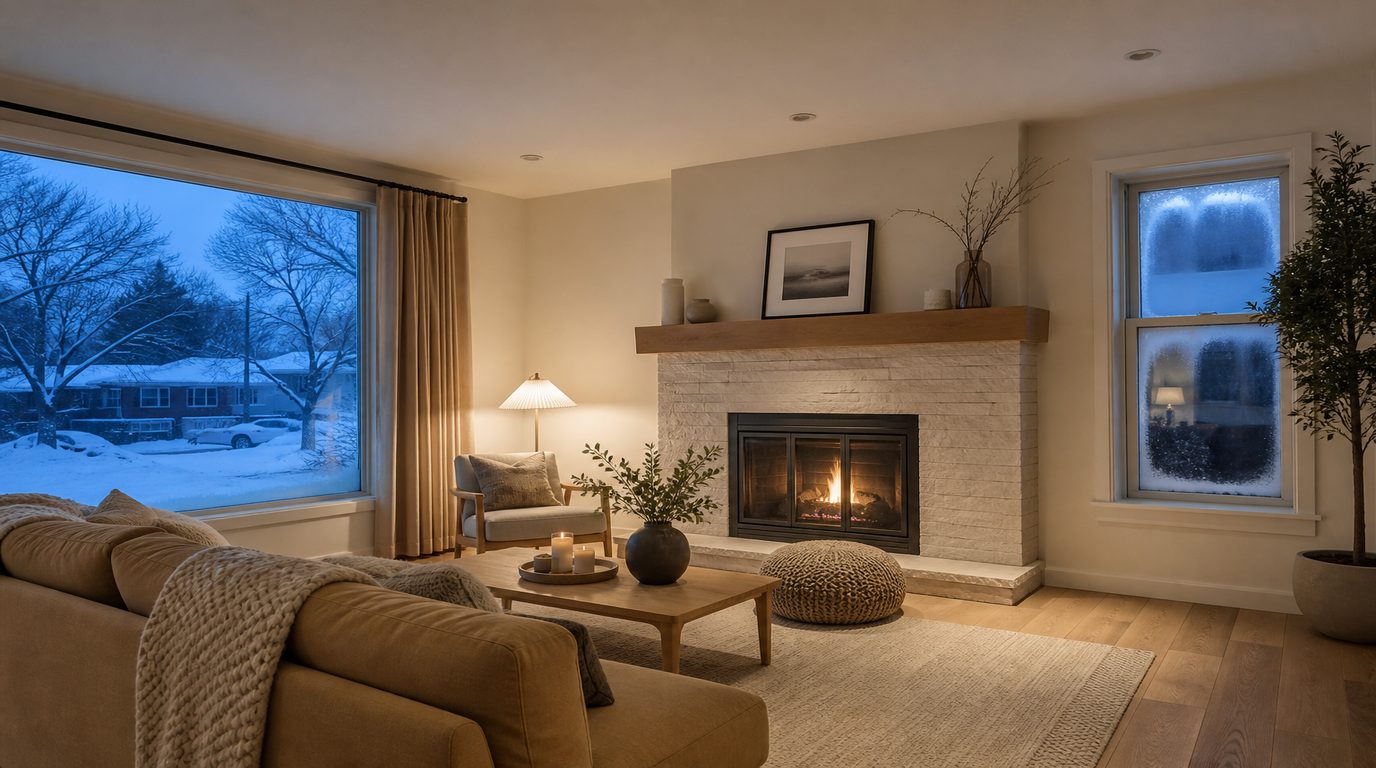
If you live in Winnipeg, or anywhere on the Canadian prairies, your home doesn’t just need to look good. It needs to feel warm, function in extreme cold, and sustain your mood through five to six months of winter. That’s not a design afterthought. That’s the entire design brief.
I’ve lived and worked through enough Manitoba winters to know that “cosy” isn’t a Pinterest aesthetic, it’s a survival strategy. When the sun sets at 4:30 PM and the windchill hits -40, your home is your refuge. The way it looks, feels, and functions during those months matters more than any summer dinner party.
This guide covers the design strategies that actually make a difference through a Canadian winter. Not just throwing a blanket on the couch (though we’ll get to that), but the deeper, more intentional choices about light, colour, texture, and material that make your home a genuine sanctuary from November through March. The decisions people wish they could undo after the first heating season live in home renovation regrets in cold Canadian climates.
Light: The Most Important Design Element in Winter
Winnipeg averages 2,353 hours of sunshine per year, more than most Canadian cities. But in December and January, those hours are concentrated in a brief window, and the sun hangs low on the horizon. The quality of light changes: it’s weaker, cooler, and more directional.
Your interior design needs to compensate.
Maximise Natural Light
Every photon counts in winter. Audit your home for light blockers:
- Remove heavy curtains from south-facing and west-facing windows. Replace with sheer panels that diffuse light without blocking it. Save heavier curtains for east and north windows where privacy matters more.
- Clean your windows inside and out before winter. Dirt and film reduce light transmission by 10 to 20%. In Winnipeg, condensation and frost buildup on windows during extreme cold further reduces light, ensure your windows are in good condition and properly sealed.
- Trim interior obstructions. Tall furniture, room dividers, and large plants placed near windows block light from reaching deeper into the room.
- Use mirrors strategically. A large mirror on a wall opposite or adjacent to a window reflects natural light into darker areas. This is one of the oldest staging tricks and it works year-round, but it’s especially effective in winter.
- Keep window wells clear. If you have basement windows, remove debris from the exterior wells and consider painting the well interior white to bounce more light downward.
Layer Artificial Light
When natural light fades at 4:30 PM, your artificial lighting takes over for the next 6 to 7 hours of waking life. One overhead fixture is not enough.
The winter lighting plan:
- Warm colour temperature everywhere. 2700K bulbs are the standard for warm, inviting light. Avoid anything above 3000K in living spaces during winter, cool white light feels clinical when it’s dark and cold outside.
- Multiple light sources per room. Minimum three: one ambient (overhead or recessed), one task (desk lamp, reading lamp), one accent (candle, shelf light, picture light). This creates depth and warmth that a single fixture can’t achieve.
- Floor lamps in corners. Dark corners make rooms feel smaller and colder. A warm-toned floor lamp in each corner expands the room psychologically.
- Candles. Real candles. The warm, flickering light of candles changes the entire atmosphere of a room. Group them on a tray, line them along a mantel, or cluster them on a coffee table. Unscented pillar candles are the most versatile.
- Dimmer switches. Being able to adjust light levels throughout the evening makes your home feel responsive and alive. Bright for cooking and cleaning, dimmed for evening relaxation.
- Smart bulbs that shift colour temperature throughout the day (cooler in the morning, warmer in the evening) mimic natural light patterns and support your circadian rhythm.
Colour: Warm Your Palette for Winter
The colour palette that works beautifully in July might feel flat or cold in January. Prairie winters desaturate the world outside your window, everything is white, grey, and brown. Your interior needs to compensate with warmth.
Colours That Work in Canadian Winters
- Warm whites and creams, not stark or blue-toned whites, which look grey under winter light. Benjamin Moore White Dove and Sherwin-Williams Alabaster are warm-toned whites that glow in low winter light.
- Warm neutrals, greige (gray-beige), camel, mushroom, warm taupe. These ground a room and feel rich under warm lighting.
- Earth tones, terracotta, rust, olive, clay, warm brown. These feel natural, grounding, and inherently warm. Biophilic design for cold climate homes is the fuller nature-indoors version of this move.
- Deep, enveloping colours for accent rooms, forest green, navy, burgundy, charcoal. A small room (den, reading nook, bedroom) painted a deep warm colour feels like a cocoon in winter.
- Sage green, the rare colour that reads both warm and fresh. It works in winter as a calming, natural tone.
Colours That Struggle in Winter
- Cool greys, especially light cool greys, which read as flat and depressing under winter light. If your walls are a cool grey, your room will feel colder from November to March.
- Pure white, looks blue and harsh without strong natural light to warm it up. The further north you live, the less workable pure white becomes.
- Pastels, washed-out pastels (pale blue, lavender, light pink) can feel cold and lifeless in winter. If you love pastels, balance them with warm accents and warm-toned lighting.
You Don’t Have to Repaint Every Season
Instead of repainting, adjust your textiles and accessories seasonally:
- Swap lightweight linen throws for chunky knits and wool
- Switch light-coloured cushion covers for deeper, richer tones
- Replace cotton bed linens with flannel
- Add warm-toned artwork or move warmer pieces to prominent positions
- Introduce warmer rug layers (sheepskins over existing rugs, for example)
This is the same principle professional home stagers use, changing the feeling of a room through accessories rather than permanent changes.
Texture: The Warmth You Can Feel
Texture is the most underrated design element in cold-climate homes. Smooth, glossy surfaces, glass, polished metal, lacquered wood, feel cold both visually and physically. Textured, matte, soft surfaces feel warm.
Build Texture Layers
On furniture:
- Upholstered furniture in nubby, woven, or bouclé fabrics
- Leather (genuine or quality faux) that develops character
- Solid wood with visible grain rather than painted or laminate surfaces
- Rattan, wicker, or woven elements for organic warmth
On surfaces:
- Woven or plush area rugs over hard floors (essential in winter, cold floors underfoot are miserable)
- Textured throw pillows in knit, velvet, or linen
- Chunky knit throws draped over chairs and sofas
- Sheepskin or faux sheepskin on chairs, benches, and bed ends
On walls:
- Woven wall hangings or textile art
- Natural wood panelling or accent boards
- Textured wallpaper (grasscloth, linen-look, or plaster-effect)
- Open shelving with books and objects rather than bare walls
On floors:
- Layer rugs, a sheepskin over a jute rug, or a smaller patterned rug over a larger neutral one
- Runners in hallways and entryways (they also protect from winter salt and water)
- Consider adding or improving carpet in bedrooms if you have hard floors and cold winters
The Winter Entryway
Your entryway is the transition zone between the brutal outdoors and your warm interior. In Winnipeg, this space takes more abuse than any other room. When the landing has to do the work of a mudroom, the winter-proof mudroom design ideas guide is the detailed version.
Winter entryway essentials:
- Boot tray, a large, heavy-duty boot tray with a raised lip to contain snowmelt and salt. This is not optional in a prairie winter.
- Durable, washable flooring, tile, stone, or LVP in the entry zone. Hardwood and carpet will be destroyed by salt and moisture.
- Coat hooks or a dedicated closet within arm’s reach of the door. Winter coats, scarves, hats, and gloves need a system, not a pile.
- Bench for sitting while removing boots. A simple bench with storage underneath is one of the most functional pieces of furniture you can own.
- Layered mat system, an outdoor scraper mat, then an indoor absorbent mat. Two layers catch what one can’t.
Thermal Comfort: Design That Actually Keeps You Warm
Design isn’t just visual, in a cold climate, physical thermal comfort is a legitimate design concern.
Window Treatments as Insulation
Single-pane and even standard double-pane windows are thermal weak points. In Winnipeg’s extreme cold, you can feel the cold radiating from windows even when they’re closed.
Design solutions:
- Thermal-lined curtains, curtains with a thermal lining reduce heat loss through windows by 25 to 40%. Choose them in warm colours and heavy fabrics for double benefit.
- Cellular (honeycomb) shades, the trapped air pockets provide genuine insulation while allowing diffused light during the day. Available in warm, neutral tones.
- Draft stoppers at window sills for older windows with air leaks.
Furniture Placement
- Pull seating away from exterior walls and windows in winter. A sofa against a cold exterior wall feels colder than the same sofa floating in the room.
- Arrange seating near heat sources when possible, near a fireplace, near a south-facing window, or over a heating vent (without blocking airflow).
- Create intimate groupings. In winter, tighter furniture arrangements feel cosier. The spacious, spread-out summer arrangement can be tightened in winter for a warmer, more intimate feel.
Flooring Comfort
Cold floors are the single biggest thermal comfort complaint in Canadian homes. Solutions:
- Area rugs on hard floors, especially in bedrooms and living rooms. A thick rug pad underneath adds insulation.
- In-floor radiant heating in bathrooms and kitchens. If you’re renovating these spaces, this is a worthwhile investment that transforms daily comfort.
- Slippers. Not a design element, but genuinely, keep a basket of guest slippers by the door. It’s a thoughtful touch that also keeps feet warm.
The Seasonal Refresh: Quick Winter Updates
You don’t need to renovate for winter. These quick changes take an afternoon and make a meaningful difference:
- Swap your throw pillow covers. Change from light linens to rich velvet, warm knit, or faux fur covers. Budget: $50 to $150 for a full living room refresh.
- Add candles to every room. Group them on trays for easy movement. Budget: $20 to $50.
- Layer your bedding. Add a heavier duvet, flannel sheets, and a folded throw at the foot. Budget: $100 to $200.
- Bring in warmth with a new rug or layer a sheepskin over an existing chair. Budget: $30 to $150.
- Update your lighting. Replace any cool-white bulbs with 2700K warm bulbs. Add a table lamp or floor lamp to a dark corner. Budget: $20 to $100.
- Introduce natural elements. Pinecones, dried eucalyptus, branches in a vase, a bowl of wooden spheres. Budget: $0 to $30 (many are free from your yard).
What Professional Designers Do Differently
Working in Winnipeg, I approach winter design as the primary design season, not the afterthought. Here’s what I prioritise for clients:
- Test all colour selections under winter light conditions. A paint colour that looks warm in June can look completely different in January’s low, cool light.
- Specify warm-toned lighting in every fixture. No exceptions for the kitchen, laundry, or bathroom.
- Design the room for its winter evening state, not its summer daytime state. Most of your living happens during the dark hours in winter.
- Layer texture into every surface. If a room looks good but feels cold, add texture, a rug, a throw, a woven basket, a wooden tray.
- Create at least one “hygge corner”, a reading nook, a window seat with cushions and a throw, a fireside chair with a lamp. A designated cosy spot improves the psychological experience of winter enormously.
Want help making your home work harder through winter? Georgia Home Design offers virtual consultations, I’ll help you create a space that’s warm, inviting, and genuinely comfortable from November to March. Book a consultation →