Sustainable Building Materials for Canadian Homes
A guide to sustainable building materials that work in Canada's climate. Eco-friendly options for insulation, flooring, siding, and more.
Georgia Home Design
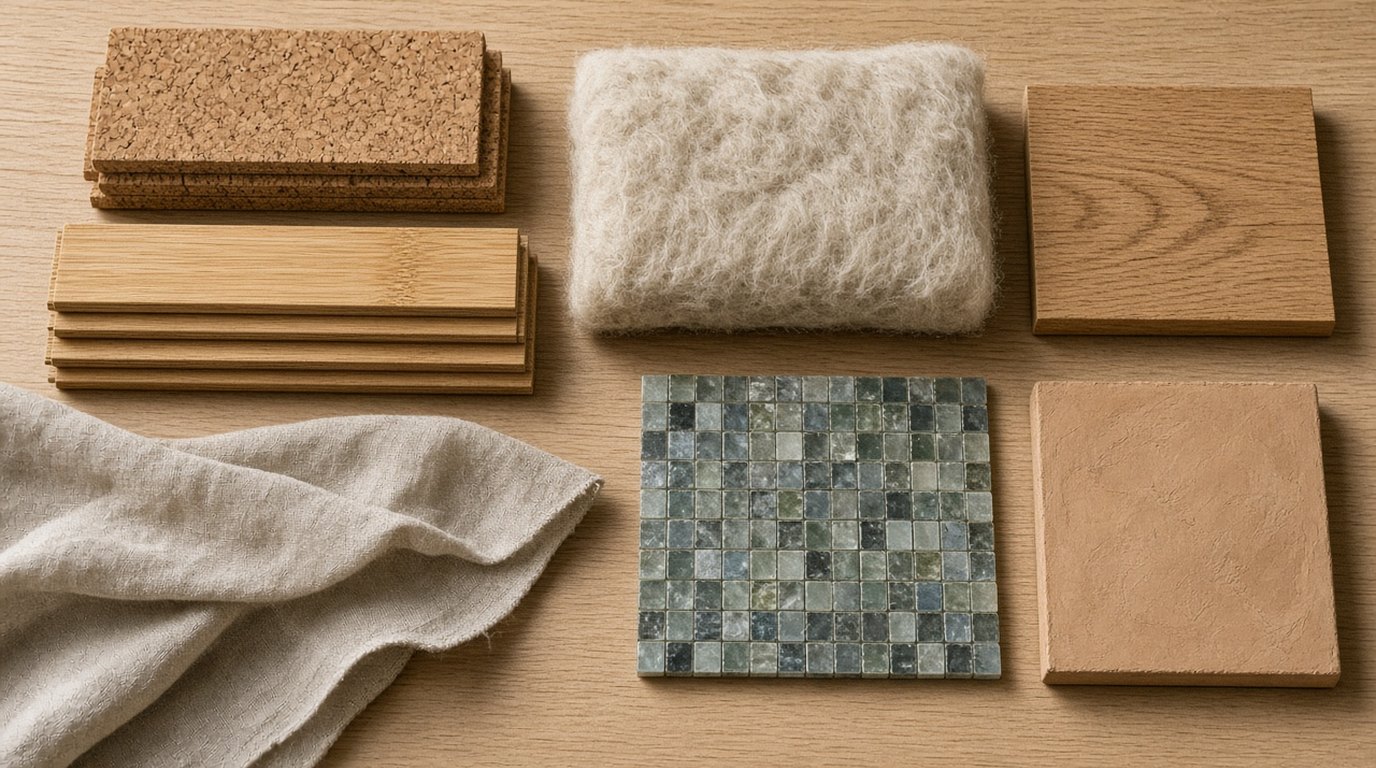
Sustainability in Canadian home building has moved well past the novelty phase. In 2026, it’s not about making a statement; it’s about choosing materials that perform well, last long, and don’t trash the planet in the process. The good news is that many sustainable materials are now price-competitive with their conventional alternatives, and some are actually cheaper when you account for energy savings and longevity.
But sustainability in a Canadian context has an extra layer of complexity. Materials that work beautifully in a temperate climate can fail in our conditions. A product rated for mild winters won’t survive -35°C. An insulation that works in dry climates might trap moisture in our homes and create mould problems. Climate performance and sustainability have to go hand in hand.
Here’s a practical guide to sustainable building materials that actually work in Canadian homes. The interiors philosophy is sustainable interior design.
Insulation
Insulation is the single most impactful material choice in a Canadian home. We spend more on heating than almost any other country, and the difference between adequate and excellent insulation shows up in every monthly utility bill for decades.
Cellulose Insulation
What it is: Recycled newsprint and paper treated with borate fire retardant.
Why it’s sustainable: Made from 80-85% recycled content, requires minimal energy to manufacture, and the borate treatment makes it fire and pest resistant without toxic chemicals.
Performance: R-3.5 to R-3.8 per inch (comparable to fibreglass). Excellent at filling irregular cavities and reducing air infiltration. It settles over time, so installation should account for 15-20% settling.
Cost: $1.50-$3.00/sq ft installed (blown-in). Comparable to or slightly cheaper than fibreglass.
Best for: Attics (blown-in), wall cavities (dense-pack), and retrofits where existing walls can’t be opened.
Mineral Wool
What it is: Rock-based insulation made from basalt and slag (a steel manufacturing byproduct).
Why it’s sustainable: Made from 70%+ recycled content, doesn’t off-gas, and is naturally fire resistant (melting point above 1,000°C). It’s also moisture-resistant, meaning it won’t absorb water or support mould growth.
Performance: R-3.3 to R-4.2 per inch. Superior sound absorption compared to fibreglass. Holds its shape without sagging over time.
Cost: $2.00-$4.00/sq ft installed. About 25-40% more than fibreglass batts.
Best for: Exterior walls, basement walls, and anywhere sound control matters. The moisture resistance makes it ideal for Canadian basements.
Spray Foam (Plant-Based)
What it is: Closed-cell or open-cell spray foam made with bio-based polyols derived from soybeans, castor oil, or other plant sources instead of petroleum.
Why it’s sustainable: Reduces petroleum content by 15-30% compared to conventional spray foam. The real sustainability benefit is performance: spray foam creates an air-tight seal that dramatically reduces heating energy use.
Performance: R-6 to R-7 per inch (closed-cell). The highest R-value per inch of any common insulation. Acts as both insulation and air barrier.
Cost: $3.00-$6.00/sq ft installed. Premium pricing, but the energy savings in Canadian heating climates can recover the cost difference within 5-8 years.
For more on energy-efficient building strategies, see our guide on Energy-Efficient Home Upgrades for Manitoba.
Flooring
Engineered Hardwood from Certified Sources
What to look for: FSC (Forest Stewardship Council) certified hardwood from responsibly managed Canadian or North American forests. Domestic species, including maple, oak, birch, and hickory, have lower transportation footprints than imported tropical hardwoods.
Performance: Engineered construction handles Canadian humidity swings better than solid hardwood. Cross-laminated layers resist the expansion and contraction that causes cracks and gaps.
Cost: $8-$18/sq ft for materials. Comparable to conventional engineered hardwood.
Cork Flooring
What it is: Harvested from the bark of cork oak trees without killing the tree. The bark regenerates every 9 years.
Why it’s sustainable: Renewable harvest cycle, biodegradable, and the manufacturing process uses low energy.
Performance: Warm underfoot, naturally sound-absorbing, and comfortable to stand on. However, cork is soft and dents under heavy furniture and pet claws. It also absorbs moisture, limiting its use in wet areas.
Best for: Bedrooms, home offices, and living rooms away from exterior doors. Not recommended for entryways, mudrooms, or basements in Canadian homes.
Cost: $6-$12/sq ft installed.
For a comprehensive comparison of flooring options, see our guide on Sustainable Flooring Options for Prairie Homes.
Reclaimed Wood
What it is: Wood salvaged from old barns, warehouses, factories, or deconstructed buildings.
Why it’s sustainable: No new trees harvested. Keeps materials out of landfills. Often features old-growth quality (tight grain, density) that’s unavailable in new lumber.
Performance: Old-growth reclaimed wood is typically harder and more dimensionally stable than new wood. It needs to be properly kiln-dried and checked for nails, lead paint, and pests before installation.
Cost: $10-$30/sq ft. Premium pricing reflects the salvage, cleaning, and milling process. Best used as accent walls, feature floors, or statement pieces rather than whole-house flooring.
Exterior Cladding
Fibre Cement Siding
What it is: A composite of cement, sand, and cellulose fibre. Brands like James Hardie dominate the Canadian market.
Why it’s sustainable: 50+ year lifespan (compared to 15-25 for vinyl), fire resistant, and doesn’t off-gas. The long lifespan means fewer replacements over the life of the building.
Performance: Handles Canadian freeze-thaw cycles well. Resists wind, hail, and UV exposure. Available in clapboard, shingle, and panel profiles.
Cost: $8-$14/sq ft installed. More expensive than vinyl ($4-$8/sq ft) but significantly more durable.
Caution: Fibre cement is heavy and requires professional installation. It also needs painting every 10-15 years, though factory-applied finishes now come with 15-year warranties.
Thermally Modified Wood
What it is: Softwood (typically pine, spruce, or ash) heated to 180-230°C in oxygen-free kilns. The heat permanently changes the wood’s cellular structure, making it rot-resistant and dimensionally stable without chemical treatment.
Why it’s sustainable: No chemical preservatives (unlike pressure-treated wood). Canadian-sourced softwoods keep the supply chain short. The modification process uses only heat, with no toxic inputs.
Performance: Excellent dimensional stability across humidity ranges. Naturally resists decay, insects, and moisture absorption. Available in siding, decking, and soffit profiles.
Cost: $8-$16/sq ft installed. Comparable to cedar, less expensive than tropical hardwoods, and longer-lasting than untreated softwood.
Reclaimed Brick
What it is: Brick salvaged from demolished buildings.
Why it’s sustainable: No new manufacturing required. Brick production is energy-intensive (kiln-fired at 1,000°C+), so reusing existing brick avoids significant carbon emissions.
Performance: Reclaimed brick from Canadian buildings has already proven it can handle decades of freeze-thaw cycles. It’s durable, beautiful, and carries character that new brick can’t replicate.
Best for: Feature walls, accent cladding, walkways, and patios. Full exterior cladding with reclaimed brick is possible but requires careful selection for consistency and structural integrity.
Structural Materials
Cross-Laminated Timber (CLT)
What it is: Large structural panels made from layers of lumber stacked at right angles and glued. CLT is increasingly used as an alternative to concrete and steel in mid-rise construction.
Why it’s sustainable: Wood sequesters carbon. A CLT building stores the carbon captured by the trees during growth, while concrete and steel production are among the largest industrial sources of CO2 emissions. Canadian forests are a natural source material, and CLT manufacturing is growing domestically.
Performance: High structural strength, excellent fire performance (charring on the surface protects the core), good thermal insulation, and fast construction times.
Cost: Currently 5-15% more than equivalent concrete construction, but costs are dropping as production scales.
Canadian relevance: Canada is a global leader in CLT production and adoption. The 2020 National Building Code update allows mass timber buildings up to 12 storeys, and provinces like BC and Quebec are actively promoting mass timber construction.
Insulated Concrete Forms (ICFs)
What it is: Interlocking foam blocks that serve as permanent formwork for poured concrete. The foam stays in place and provides insulation on both sides of the concrete wall.
Why it’s sustainable: The high thermal mass and continuous insulation of ICF walls reduce heating energy by 30-50% compared to standard framing. The durability (100+ year lifespan) means fewer rebuilds over time.
Performance: R-22 to R-30 depending on foam thickness. Excellent air tightness, fire resistance, and sound insulation. Handles Canadian extreme cold exceptionally well.
Cost: 5-10% more than conventional framing for a new build. The energy savings offset the premium within 5-10 years in most Canadian heating climates.
Interior Finishes
Low-VOC and Zero-VOC Paint
Every major Canadian paint brand now offers low-VOC or zero-VOC formulations. VOCs (volatile organic compounds) are the chemicals that off-gas from conventional paint, causing that “new paint smell” and contributing to poor indoor air quality.
What to choose: Look for Green Seal or EcoLogo certification. Benjamin Moore Natura, Sherwin-Williams Harmony, and Dulux Lifemaster are all zero-VOC options that perform comparably to conventional paint.
Cost: No premium: zero-VOC paints are now priced identically to conventional lines from the same brands.
For paint colour recommendations, our guide on Canadian Paint Colours covers the latest trends.
Natural Stone (Locally Sourced)
Canadian quarries produce excellent granite, limestone, marble, and slate. Choosing locally sourced stone reduces transportation emissions and supports domestic industry.
Applications: Countertops, backsplashes, fireplace surrounds, bathroom vanities, and flooring.
Cost: Varies widely by stone type and finish. Canadian granite for countertops runs $60-$120/sq ft installed, comparable to imported options.
Making Sustainable Choices Practical
Sustainable building doesn’t have to be all-or-nothing. The highest impact choices are:
- Insulation: The material you choose here affects energy consumption for the life of the building
- Windows: High-performance windows (triple-glazed, low-E coated, argon-filled) reduce heat loss dramatically
- Siding: Choosing a 50-year material over a 20-year material cuts replacement waste by more than half
- Flooring: FSC-certified or reclaimed wood, or durable LVP that lasts 25+ years
Start with the envelope (insulation, windows, siding), then move to interior finishes. The envelope choices have the biggest environmental and financial impact because they determine energy consumption for decades.
For more on sustainable design philosophy, check out our guide on Sustainable Design in Canada.
Want advice on which smart upgrades make sense for your home? Georgia Home Design offers virtual consultations; I’ll review your space, your lifestyle, and your budget to recommend the right materials that are beautiful, durable, and responsible. Book a consultation →