Home Office Design That Actually Helps You Focus
Designing a productive home office is about ergonomics, lighting, and reducing distractions, not just aesthetics.
Georgia Home Design
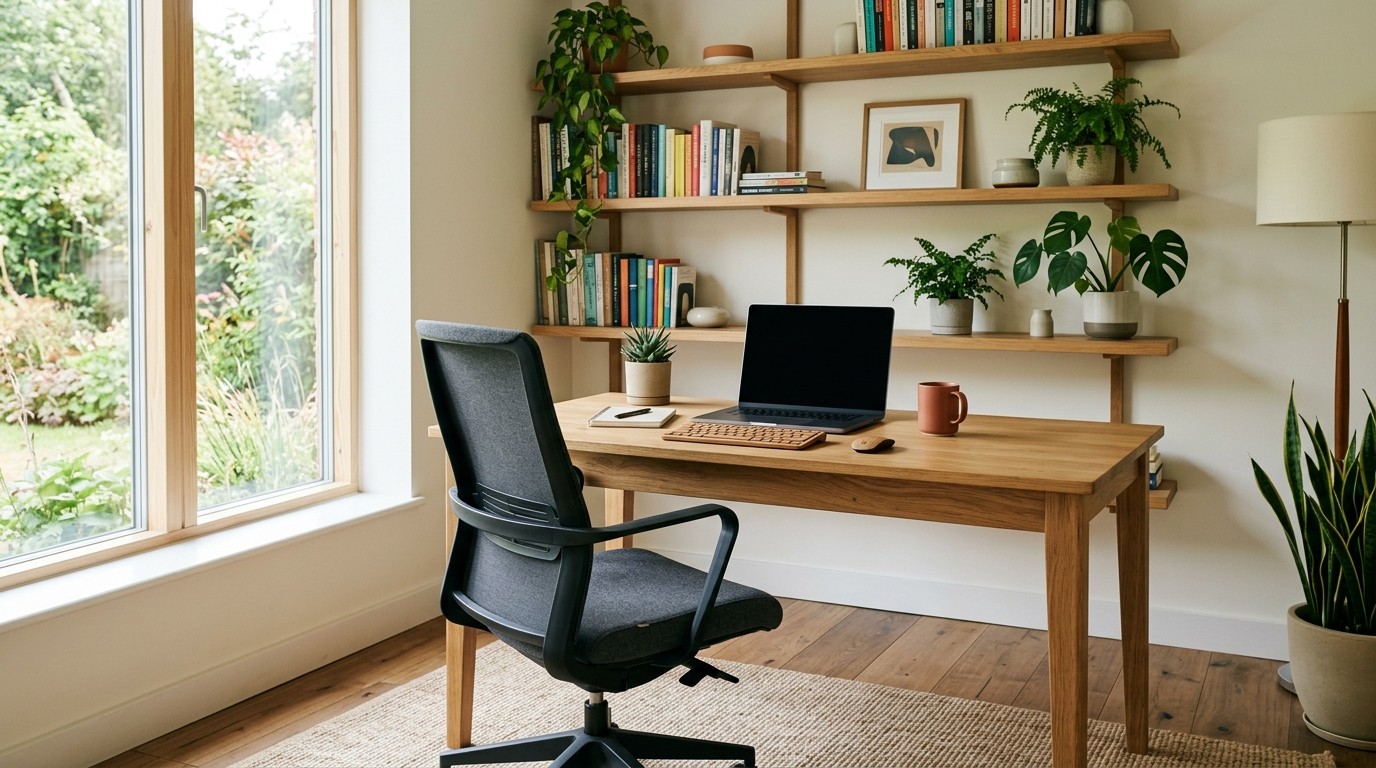
The Post-Pandemic Home Office
Remote work is permanent for millions of Canadians. The kitchen table setup that was tolerable for a few weeks in 2020 is not acceptable as a long-term workspace. A well-designed home office directly impacts your productivity, physical health, and mental wellbeing. For the longer ergonomics, lighting, and layout checklist, see home office design ideas. If the room itself still needs to be built, see home office renovation ideas.
The Non-Negotiables
1. Ergonomic Chair
You will sit in this chair 8 hours a day. A $200-$500 ergonomic office chair is not a luxury, it is a health investment. Look for adjustable seat height, lumbar support, armrests, and a breathable back.
2. Desk at Correct Height
Standard desk height is 73-76 cm (29-30 inches). Your forearms should be parallel to the floor when typing. If your desk is too high or too low, you will develop shoulder, wrist, and neck problems.
3. Monitor at Eye Level
The top of your screen should be at or slightly below eye level. This prevents neck strain from looking up or down for extended periods. A monitor arm or laptop stand is essential if you use a laptop.
4. Natural Light (Without Glare)
Position your desk perpendicular to the window, not facing it (glare) or with your back to it (screen glare on video calls). Side lighting is ideal. Supplement with a desk lamp for task lighting.
For more on this topic, see our guide on Home Lighting Design: How to Light Every Room Like a Designer.
Design for Focus
For more on this topic, see our guide on Colour Psychology in Interior Design: How Paint Affects Your Mood.
Minimise Visual Clutter
A cluttered desk creates a cluttered mind. Keep only what you use daily on the desk surface. Use drawers, shelves, and cable management to hide everything else.
Sound Management
If your home office is in a shared space, consider a white noise machine, noise-cancelling headphones, or acoustic panels. A bookshelf filled with books provides surprisingly effective sound absorption.
Door or Divider
If possible, choose a room with a door. A physical barrier between work and home life is critical for both productivity and mental health. If a door is not available, a room divider or curtain creates a psychological boundary.
Background for Video Calls
Your video call background is now part of your professional image. A clean bookshelf, a simple art print, or a plant creates a professional backdrop. Avoid windows directly behind you (backlight) and messy shelves.